
.png)
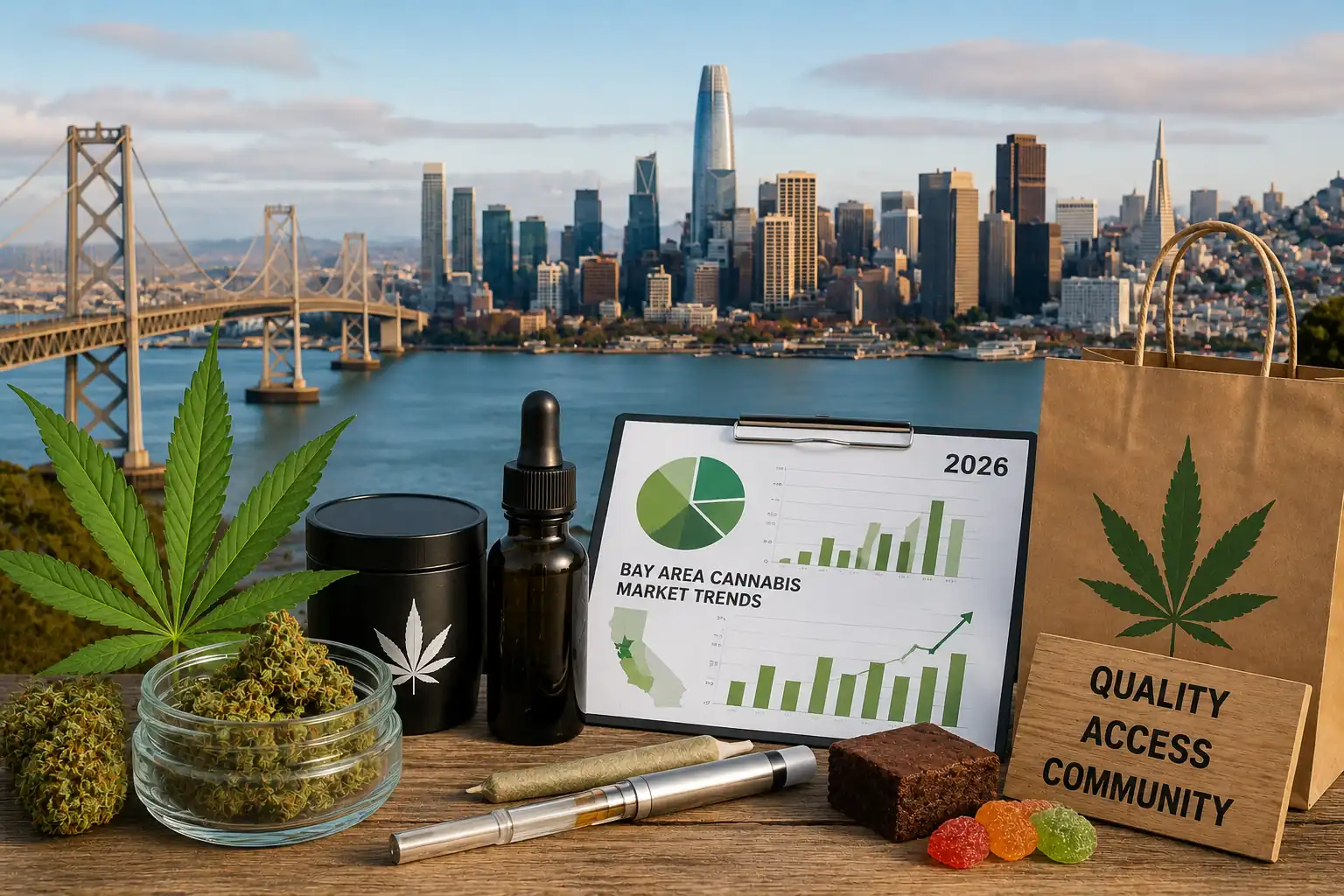
Bay Area cannabis market trends in 2026 show a mature but competitive landscape shaped by pricing pressure, consumer loyalty, and evolving California cannabis market trends. The region remains one of the most established cannabis markets in the United States, yet growth is no longer driven by novelty. Instead, Bay Area cannabis market trends now reflect a shift toward value shopping, brand trust, and product diversity.
Public data from the California Department of Cannabis Control shows that statewide cannabis sales have remained in the multi-billion-dollar range in recent years, though year-over-year growth has slowed. That statewide slowdown influences Bay Area cannabis industry trends and purchasing behavior across San Francisco, Oakland, San Jose, and surrounding counties.
Quick Snapshot of 2026
- Bay Area cannabis market trends show slower growth but steady demand.
- Bay Area cannabis consumers are comparing price, potency, and brand reputation more closely.
- California cannabis market trends continue influencing local competition and pricing.
What Do Bay Area Cannabis Market Trends Reveal in 2026?
Bay Area cannabis market trends point to stability rather than explosive growth. Early legalization years brought rapid expansion. Now, the focus is on retention and efficiency.
Key patterns include:
- Flattening overall sales growth compared to early years
- Increased discounting and promotional pricing
- Strong competition among licensed retailers
- Greater emphasis on product education
Bay Area cannabis statistics suggest that while total transaction volume remains high, average order value has slightly decreased in some urban areas due to price competition.
How Do Bay Area Cannabis Statistics Compare to Statewide Data?
California cannabis market trends show that the state remains the largest legal cannabis market in the country. However, competition from illicit sellers and high operating costs continue to pressure margins.
Here is a simplified comparison:
Bay Area cannabis industry trends closely follow California cannabis market trends, especially in urban centers where licensing density is high.
Who Are Bay Area Cannabis Consumers in 2026?
Bay Area cannabis consumers are diverse across age, income, and lifestyle. Unlike early adopters, today’s customers include:
- Professionals seeking stress relief
- Older adults exploring wellness options
- Social consumers purchasing low-dose products
- Tourists visiting legal retail stores
Bay Area cannabis consumers are more informed than ever. They read lab results, compare THC percentages, and ask about terpene profiles. Bay Area weed market trends show increasing interest in balanced THC-CBD products and lower-dose edibles.
What Product Categories Are Leading Bay Area Weed Market Trends?
Bay Area weed market trends indicate that flower remains the top category by volume, but other segments are evolving.
Leading product categories include:
- Flower
- Pre-rolls
- Vapes
- Edibles
- Concentrates
Bay Area cannabis statistics show that vape sales fluctuate depending on regulatory shifts and health awareness. Edibles continue steady growth, especially low-dose and fast-acting options.
Bay Area cannabis market trends also highlight increasing demand for value flower and bulk purchasing options.
How Is Pricing Shaping Bay Area Cannabis Industry Trends?
Pricing is central to Bay Area cannabis industry trends. Retailers face:
- High rent and labor costs
- Local taxes
- State excise tax
- Ongoing compliance expenses
Because of this, Bay Area weed market trends reflect tighter margins and more promotions. Consumers now expect:
- Daily deals
- Loyalty discounts
- Bundle pricing
- First-time buyer promotions
California cannabis market trends show that price compression continues statewide, and the Bay Area follows closely.
Are California Cannabis Market Trends Impacting Local Competition?
Yes. California cannabis market trends strongly influence Bay Area cannabis market trends because:
- Licensing policies apply statewide
- Tax structures affect all retailers
- Supply chain costs influence wholesale pricing
Bay Area cannabis industry trends suggest that operators must focus on operational efficiency. Inventory turnover and menu optimization matter more than expansion alone.
What Role Does Tourism Play in Bay Area Weed Market Trends?
Tourism plays a smaller role compared to cities like Las Vegas, but it still contributes. Visitors to San Francisco and nearby regions often seek legal cannabis retail experiences.
California cannabis tourism trends show that international and domestic travelers are curious about regulated purchasing. However, strict public consumption rules limit lounge-style growth in many areas.
Bay Area cannabis market trends reflect this dynamic: strong retail shopping, limited public consumption venues.
What Are the Main Challenges in 2026?
Bay Area cannabis industry trends highlight several challenges:
- Oversupply in certain product categories
- Regulatory compliance complexity
- Ongoing competition from unlicensed sellers
- Consumer price sensitivity
Bay Area cannabis statistics suggest that retail saturation in some neighborhoods increases competition per square mile.
How Is the Bay Area Cannabis Retail Market Evolving?
Bay Area cannabis market trends show that retail strategies are shifting toward:
- Better in-store education
- Online menu transparency
- Fast pickup options
- Streamlined checkout
Bay Area cannabis consumers increasingly browse online before visiting. That behavior mirrors broader California cannabis market trends in digital engagement.
Retailers that combine strong branding with customer education tend to outperform stores focused only on pricing.
Also read: Oakland Cannabis Statistics 2026
FAQ Section
What are Bay Area cannabis market trends in 2026?
Bay Area cannabis market trends show stable but competitive sales, price compression, and strong consumer awareness.
How do Bay Area cannabis statistics compare to the rest of California?
Bay Area cannabis statistics reflect high retail density and strong competition, closely aligned with statewide California cannabis market trends.
What do Bay Area cannabis industry trends suggest for businesses?
Bay Area cannabis industry trends suggest focusing on efficiency, loyalty programs, and optimized product mix.
Who are Bay Area cannabis consumers today?
Bay Area cannabis consumers include professionals, wellness-focused adults, and experienced buyers who compare lab data and price.
What are current Bay Area weed market trends?
Bay Area weed market trends show continued demand for flower, increased value shopping, and steady interest in edibles and pre-rolls.
Bay Area cannabis market trends confirm that the region remains one of the most competitive cannabis environments in the country. Growth is steadier now, but demand remains strong. As California cannabis market trends continue evolving, retailers must focus on trust, education, and pricing balance. At Ivy Hill Dispensary, we continue monitoring Bay Area cannabis industry trends to better understand how consumers shop and how the retail landscape adapts in 2026.
Oakland Cannabis Statistics 2026: A Deep Dive into Local Market Trends
Read More »
Oakland Legendary Cannabis: A Guide to the New Equity Certification
Read More »
Honoring Our Roots During Cannabis Equity Week
Read More ».png)

.png)

.png)